
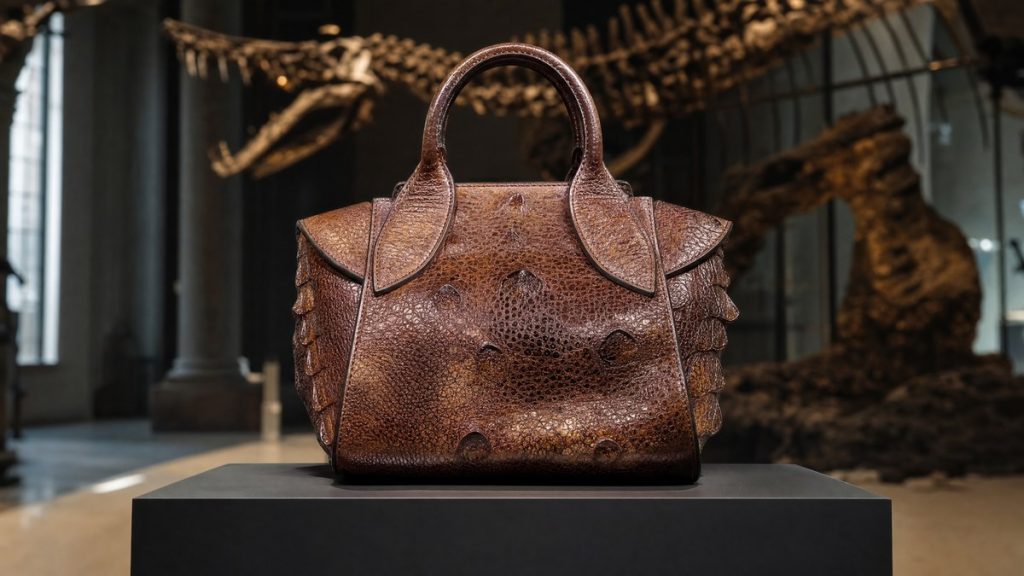
Dinosaur Hide Goes Designer: T. rex Leather Purse Hits the Auction Block
It sounds like something from a Spielberg fever dream, but a handbag pitched as the world’s first made from lab-grown Tyrannosaurus rex leather is heading to auction with a jaw-dropping $500,000 estimate. Yes, that T. rex. The same prehistoric predator that’s been extinct for 66 million years is suddenly the buzziest new “designer” in luxury fashion.
- The accessory is being marketed as the first handbag ever crafted from lab-grown T. rex leather.
- Auction watchers expect bidding to reach around $500,000, putting it in Hermès Birkin territory.
- The bag was engineered using lab-grown leather technology rather than actual dinosaur remains.
How You Make Leather From a Long-Dead Dinosaur
No, paleontologists didn’t peel a hide off a fossil. The handbag was produced using lab-grown leather, an emerging material that uses cellular engineering to grow animal skins in a lab without raising or slaughtering an animal. The team behind the project says it referenced ancient collagen sequences associated with T. rex to inform the engineered material, then grew the leather in a controlled environment.
The result, according to its makers, is a hide that’s biologically inspired by the king of the Cretaceous but produced with modern cell-culture techniques. Whether you consider that “real” T. rex leather or a clever marketing flourish depends on how strict you want to be with the definition. Either way, no dinosaurs were harmed in the making of this purse.
A $500K Price Tag and a Very Strange Status Symbol
The estimated $500,000 hammer price puts this handbag in rarefied company. For context, that’s the kind of money collectors throw at ultra-rare Hermès bags, museum-grade watches, or signed pieces of art. Now it could buy you a clutch with prehistoric bragging rights.
Auction houses have been chasing buzzy lots in recent years, leaning into novelty pieces that double as cultural conversation starters. A T. rex leather handbag checks every box: science-fiction premise, sustainability angle, instant headlines, and the kind of rich-collector mystique that drives bidding wars. It’s the rare item that appeals equally to fashion editors, biotech nerds, and Jurassic Park diehards.
Sustainable Flex or Marketing Spectacle?
Supporters of lab-grown leather argue it could shrink the environmental footprint of luxury fashion. Traditional leather production is tied to cattle ranching, deforestation, and heavy water use, while cultivated alternatives skip the animal entirely. Brands have been experimenting with mushroom leather, cactus leather, and various biofabricated hides for years, but a dinosaur-branded version vaults the whole conversation into a new spotlight.
Critics will likely call it a stunt. A $500,000 handbag isn’t exactly accessible eco-fashion, and slapping a T. rex label on a lab-grown material is undeniably theatrical. But theater has a way of moving the needle. If a single absurd accessory gets people googling cultivated leather, the makers will probably consider it a win, regardless of the final gavel price.
What This Bizarre Bag Says About Where Luxury Is Heading
The handbag is a clear sign that the next wave of high-end fashion may be shaped less by tanneries and more by petri dishes. Lab-grown materials, ancient DNA references, and biotech partnerships are creeping into industries that were once defined by craft and tradition. A purse that blends paleontology with cellular agriculture would have sounded ridiculous a decade ago. Now it has an auction estimate higher than most American homes.
Whether the buyer ends up being a fashion collector, a tech billionaire, or a museum hoping to display science history in handbag form, one thing is clear: the bidding war for this T. rex leather oddity will be one of the strangest luxury moments of the year. Extinction, it turns out, is not the end of the runway.
