
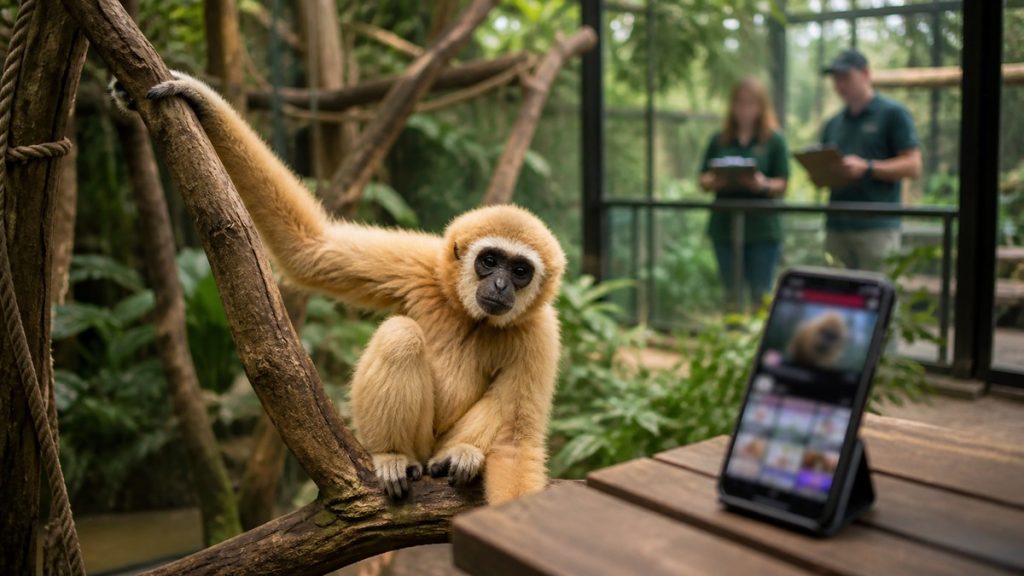
A short video of a famous actor cuddling a small, pale-faced ape looked harmless enough, until wildlife officials started asking where the animal came from. Within days, that single clip had opened an investigation stretching across two Indian states and more than 2,000 kilometers.
- Tamil film star Vikram posted, then deleted, a clip of himself playing with an endangered lar gibbon.
- Forest officials are tracing the animal’s paper trail from Chennai back to Manipur, near the Myanmar border.
- Lar gibbons are protected under CITES, and keeping one legally in India requires a stack of permits.
How a Playful Video Became a Legal Headache
On a Monday in August 2026, Vikram, one of the biggest names in Tamil cinema, shared footage of himself hugging and playing with a lar gibbon on Instagram. Fans watched an award-winning actor with a career spanning more than three decades goofing around with a wide-eyed little ape. Some media even called the gibbon his new pet. Hours later, the clip vanished from his account.
By then, the internet had done what it does. Screenshots and reposts kept the video alive, and Tamil Nadu’s forest department took notice. Officials said the gibbon was being kept at the home of one of Vikram’s relatives in Chennai. His public relations officer said the media would be told if the actor decided to issue a statement, and so far Vikram has stayed quiet.
It’s worth being clear about what officials have and haven’t said. They have not concluded the animal was trafficked, and they have not said Vikram owned it or brought it into the country. What they want to know is simpler and harder at the same time. Where did this gibbon come from, and did everyone who handled it follow the rules?
Why a Lar Gibbon Is No Ordinary Pet
Lar gibbons are small apes native to the tropical forests of southeast Asia, including Thailand, Myanmar and Malaysia. You can spot one by the ring of white fur around its face and its blonde or dark brown coat. They live in small family groups and swing through the canopy, which is a long way from a private home in a South Indian city.
The species is listed as endangered. Habitat loss, hunting and the illegal pet trade have all chipped away at their numbers. They’re also protected under CITES, the international agreement that tightly restricts trade in endangered species. India folded those protections into its own wildlife laws, so anyone keeping such an animal has to register it and follow strict rules on possession and transfer. As the state’s chief wildlife warden explained, importing an exotic animal legally means submitting a foreign trade permit, a no-objection certificate and a wildlife conservator’s certificate. That’s a lot of paperwork for one small ape.
Following the Paper Trail North
The investigation led officials to the northeastern state of Manipur, which borders Myanmar. According to records on PARIVESH, the government portal used to register exotic animals, a Manipur-based man had declared eight lar gibbons back in 2020, four males and four females, with Malaysia listed as their country of origin.
From there the trail gets specific. On 5 June 2026, one male and two female gibbons were moved from Manipur to a person in Perundurai, in Tamil Nadu’s Erode district, with adoption listed as the reason. Investigators say they haven’t yet found paperwork showing the state’s chief wildlife warden approved that move. Two months later, on 5 August, one male and one female were transferred again, this time from Perundurai to Vikram’s relative in Chennai.
India’s Wildlife Crime Control Bureau has now joined the case, asking Chennai officials to verify documents and act on what they find. Wildlife activists have also raised questions about how the animals first entered India, since the northeast has been flagged as a route for smuggled wildlife.
What This Case Should Make Us Ask
Stories like this land differently when a celebrity is involved, but the bigger picture is about demand. Customs officers keep intercepting live reptiles, birds and primates hidden in luggage arriving from southeast Asia. In July 2025, more than 350 exotic animals from Bangkok were seized at Mumbai and Pune airports over two months. A cute video can quietly fuel that market, even when nobody sets out to break the law. If someone offers you an endangered animal for sale, the honest response is to walk away and ask questions. Wild creatures belong in the wild, not in a living room clip.




More Stories
A Golden Retriever Tried to Make Friends With a Burglar
Terrier Rescued After Two Days in a Badger Sett
Bumble Bees Cracked a Brain Teaser Scientists Thought Only Big-Brained Animals Could